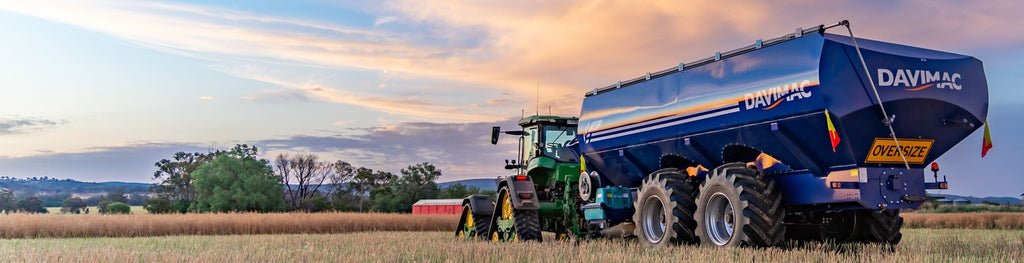

How chaser bin scales and weighing systems work
Load cells turn every unload into a number. How chaser bin weighing works, why it matters at the truck, and what to check on any brand's setup.
How chaser bin scales and weighing systems work
Most chaser bins run on volume: the operator judges the load by eye against the bin's rated capacity. Scales replace that guess with a number. Load cells under the bin weigh the grain in real time, an in-cab indicator shows the operator exactly what's on board, and every unload into a truck becomes a known figure rather than an estimate. Here's how the systems work, what they cost you to skip, and what to look for.
In this guide:
- Volume estimates vs load cells
- Why the number matters: filling trucks
- Why the number matters: knowing your paddocks
- How the Davimac system is set up
- What to check on any brand's scale setup
- Are chaser bin scales worth it?
- Quick answers
Volume estimates vs load cells
A bin's rated capacity is a wheat figure at 0.8 kg per litre, so judging weight by fill level means adjusting for crop, moisture and how level the load sits, on the move, at night, in dust. Experienced operators get close; nobody gets it right every load. Load cells remove the variables: sensors mounted between the bin and the undercarriage measure the actual mass sitting on them, unaffected by what the crop is or how it's heaped. On Davimac bins, scales are an option on every model in the chaser bin range, fitted as load cells with an in-cab readout.
Why the number matters: filling trucks
The obvious payoff is at the truck. Grain trucks run to mass limits, and the difference between a well-filled truck and an overloaded one is invisible from the bin. Weighing on the chaser means every truck leaves legal and full, not legal and light or full and illegal. Kondinin Group's chaser bin research rates scales a genuine asset for exactly this reason: accurate truck filling, load after load.
Underfill costs money in wasted trips; overfill risks fines and, more seriously, obligations under the national Chain of Responsibility rules, which place duties on the people loading vehicles, not just the drivers of them. A known weight at the point of loading is the simplest way to stand behind every load that leaves the paddock.
Why the number matters: knowing your paddocks
The quieter payoff is agronomic. When every bin load is weighed, you get paddock-level yield truth independent of the header's yield monitor, delivered as tonnes actually carted rather than sensor estimates. Over a season that's real data on what each paddock produced; over several seasons it's the evidence base for variety, fertiliser and CTF decisions. The header monitor tells you a pattern; the scales tell you the total.
How the Davimac system is set up
Davimac fits load cells matched to each bin, wired to an in-cab indicator showing live weight through fills and unloads. From there, an optional battery-powered Bluetooth transmitter connects the scales to the Agrimatics Libra Cart harvest management system, which puts loads, paddock totals and truck records on a phone or tablet app and does the bookkeeping automatically.
New for 2026, a Libra Cart upgrade adds automatic gate control: set the target weight and the bin meters that exact amount into the truck and shuts the gate itself, taking the judgement call out of topping off a load. Option details by model are on the specifications page.
What to check on any brand's scale setup
Four things separate a good weighing installation from a frustrating one. Mounting: load cells should sit in the load path between bin and undercarriage, protected from stubble and strike damage. Calibration: ask how the system calibrates and how often it needs doing; a system that drifts is worse than no system, because you trust it. Display: the indicator must be readable in cab, in daylight, while moving. Data: if you want records rather than just a live number, check the system exports or syncs somewhere useful rather than dying with the display.
A calibration habit worth building: cross-check the scales against a weighbridge docket early each harvest, then spot-check when crops change. Five minutes against a known weight is what keeps the season's data honest.
Are chaser bin scales worth it?
If trucks leave your paddocks for a receival site, yes, and the case gets stronger the further they travel. The option pays for itself in fuller legal loads and saved trips before the agronomic data is even counted. If you're weighing up a new bin, scales belong in the first conversation, not the accessories afterthought; our chaser bin buyer's guide covers where they sit against the other options worth having.
Quick answers
How do chaser bin scales work?
Load cells mounted between the bin and the undercarriage measure the actual mass of grain on board and display it on an in-cab indicator in real time. Unlike volume estimates, the reading is unaffected by crop type, moisture or how the load is heaped.
Do chaser bin scales help with road compliance?
Yes. Grain trucks run to mass limits, and weighing loads on the chaser bin means every truck leaves full and legal rather than estimated. Under Chain of Responsibility rules, duties extend to the people loading vehicles, which makes a known weight worth having.
What is Libra Cart?
Libra Cart is Agrimatics' harvest management system. A Bluetooth transmitter connects the chaser bin's load cells to a phone or tablet app, recording loads, paddock totals and truck records automatically. On Davimac bins it requires the load cell option, and a 2026 upgrade adds automatic gate control for unloading set weights.